01 February 2026
Imagine the morning.
Two electric cars are standing in the parking lot. Both need energy. You don’t want to choose: this one first, the other later, in a moment, or afterwards. You want to plug in and have peace of mind.
This is exactly where a topic emerges that is becoming essential for many investors, companies, and private users:
the dual EV charging station.
It’s not a gadget.
It’s part of the infrastructure — and if chosen incorrectly, it becomes a limitation.
But if chosen well, it becomes something you simply stop thinking about.
And that is exactly what this article is about.
Why is a dual EV charging station a smart choice today?
Electromobility is no longer a novelty.
Two electric vehicles in one home, company, or fleet is now a real scenario — not a “vision of the future.”
-
allows two vehicles to charge simultaneously,
-
brings order to the space (one dedicated point instead of temporary setups),
-
prepares your installation for the years ahead,
-
eliminates conflicts and time limitations.
It’s a solution that thinks ahead instead of reacting to problems.
What really matters when choosing an EV charging station?
Charging power – real, not just marketing claims
The optimal standard today is 2 × 22 kW, which means:
-
fast charging in three-phase mode,
-
adjustable power range from 3.6 to 22 kW,
-
full compatibility with most EVs available in Europe.
A station that is too weak will quickly become a bottleneck.
A station that is overly complicated will become a source of problems.
RFID Authorization – Order Instead of Improvisation
A charging station that is accessible “to everyone” quickly becomes owned by no one.
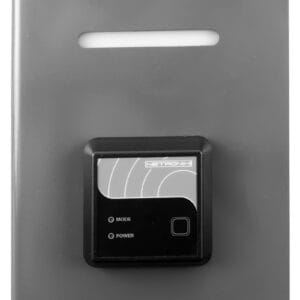
An RFID reader solves this simply:
-
access is limited to authorized users only,
-
easy control in companies, hotels, and office environments,
-
prevents unauthorized or accidental use.
It’s a small detail that makes a huge difference in everyday operation.
Safety That Works in the Background
A good EV charging station should not demand your attention.
It should respond automatically when something goes wrong.
Key safety components include:
-
overcurrent protection,
-
residual current protection,
-
RCMU module monitoring DC leakage current,
-
intelligent charging controller.
This ensures that the installation:
-
protects both the user and the vehicle,
-
automatically stops charging in case of an error,
-
operates reliably for years.
Outdoor Conditions – Reality, Not Theory
Most charging stations operate outdoors.
Rain, frost, and sun are everyday conditions — not exceptions.
That’s why the following features matter:
-
IP54 protection rating,
-
UV resistance,
-
operating temperature range from –20°C to +50°C,
-
durable metal housing.
There is no room for material compromises here.
Practical Example: Doktorvolt® DV-5169-EV
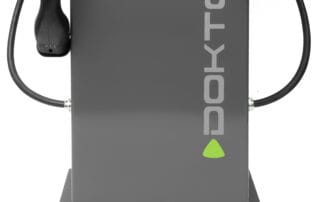
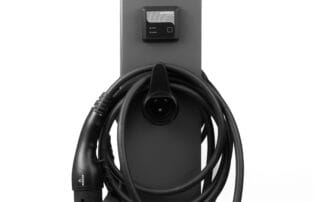
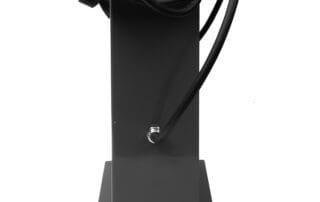
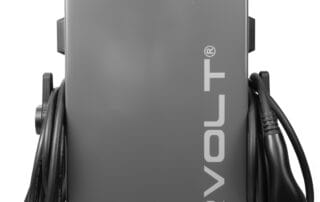
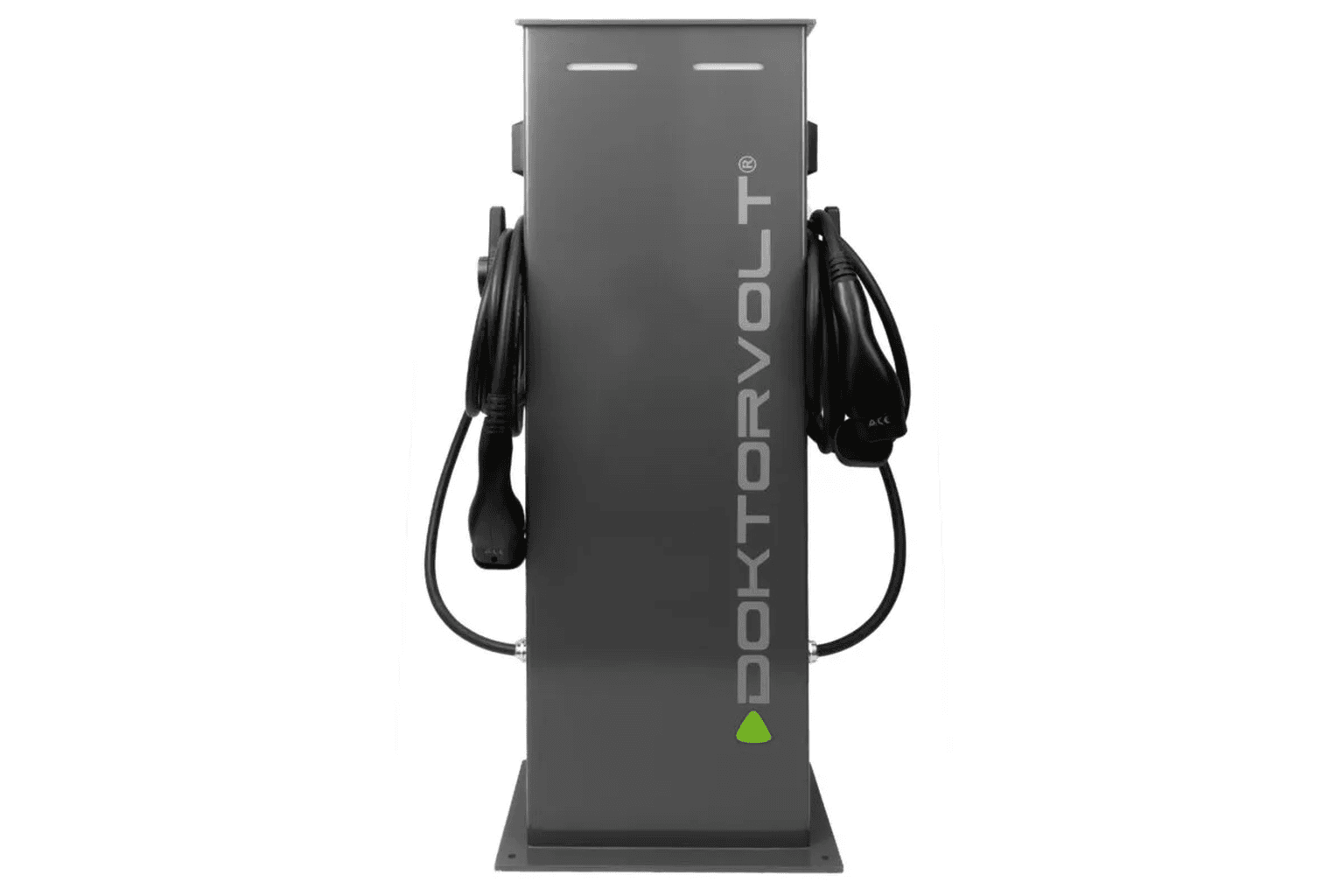
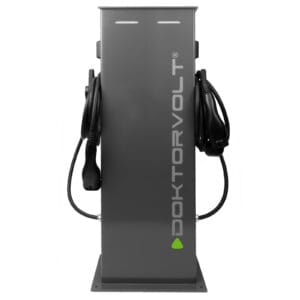
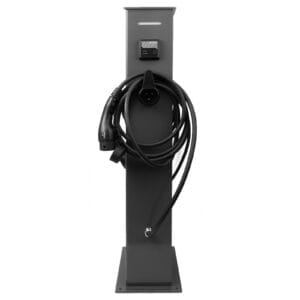
A strong example of a well-designed solution is the Doktorvolt® EVSE DV-5169-EV dual EV charging station.
What makes it stand out in real-world use?
-
2 × 22 kW charging power,
-
simultaneous charging of two vehicles,
-
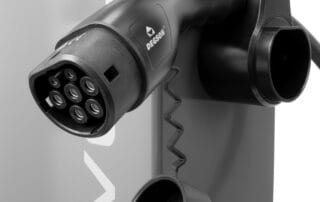
two 5-meter cables with Type 2 connectors (IEC 62196-2),
-
RFID reader for user authorization,
-
clear LED status indicators:
-
blue – ready,
-
green – charging,
-
red – error,
-
-
powder-coated aluminum housing,
-
IP54 protection rating.
This is a charging station designed for daily, intensive use — both at home and in commercial environments.